

Last touch attribution is still how a lot of Shopify stores read their ad results, often without anyone choosing it. Whatever the shopper clicked last gets the whole sale. Data-driven attribution spreads that credit across the touchpoints that actually moved people toward buying. Here is how the two compare, what changed in Google's tools, and when switching makes sense.
Short answer: Last touch attribution gives 100% of the credit to the final click, so brand search and retargeting look great and the campaigns that created demand look weak. Data-driven attribution (DDA) uses your own conversion paths to share credit by estimated contribution. DDA is the default in GA4 and Google Ads, and usually the better choice, but it is still a model, not the truth.
What Is Last Touch Attribution?
Last touch attribution (also called last click attribution) gives all conversion credit to the final interaction before a purchase. Everything earlier in the journey gets zero: the prospecting ad that introduced your brand, the blog post that explained the product, the email that kept you top of mind.
It is popular because it is simple and easy to explain. It is also the logic most people fall back on when they compare a channel's sales in a spreadsheet. For a wider overview of first click, linear and the other classic models, see our glossary page on marketing attribution. This post sticks to the choice most stores face today: last touch or data-driven.
The Problem With Last Touch Attribution
Take one shopper. They see a Meta prospecting ad, visit your site, read a product guide, join your Klaviyo list, get two emails, then search your brand on Google, click a branded search ad and buy.
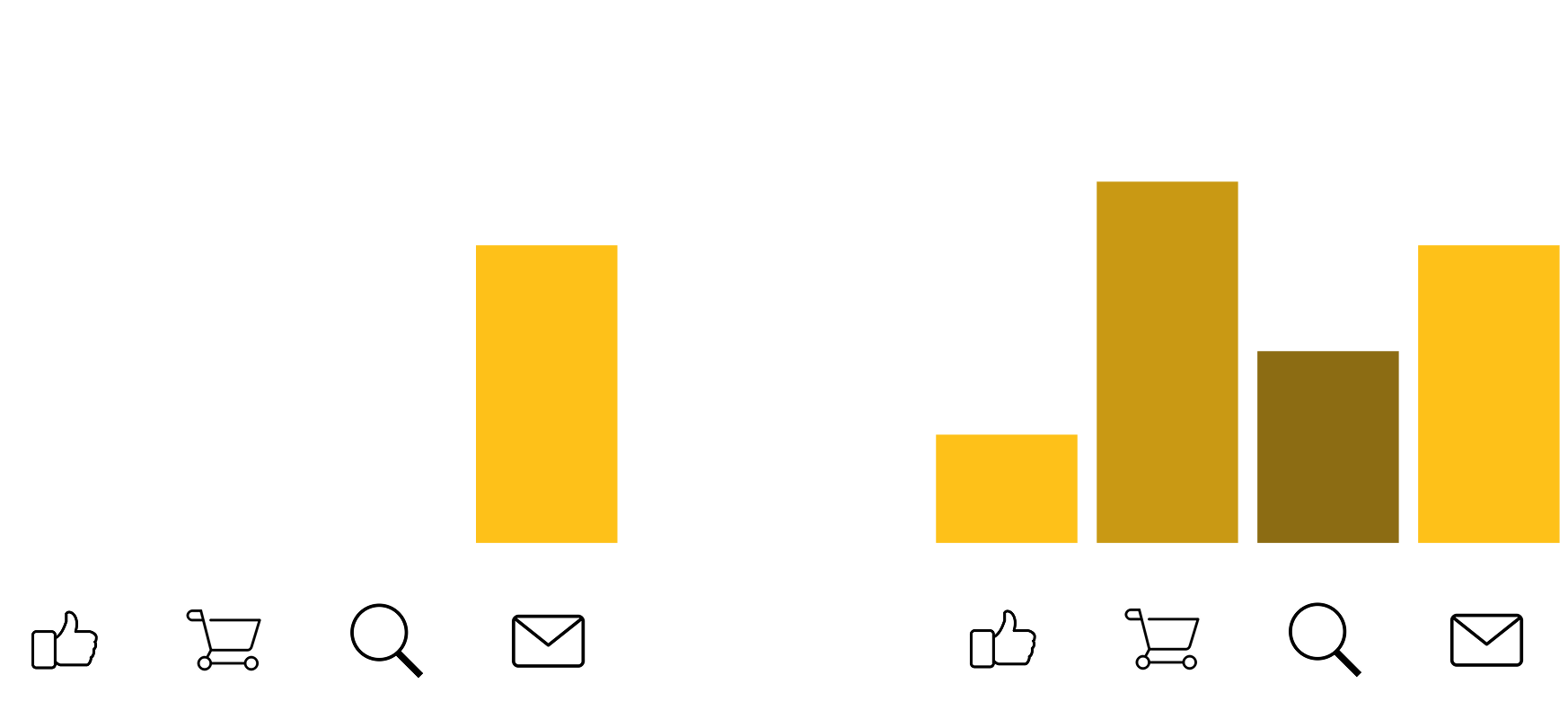
Under last touch attribution:
-
Google Ads branded search: 100% of the credit
-
Meta prospecting: 0%
-
Email: 0%
-
Organic content: 0%
Your reports now show branded search with a huge ROAS and Meta prospecting with a poor one. So you move budget from Meta to Google. Fewer new people discover the brand, fewer people search for it, and a few months later branded search ROAS drops too.
That is the loop last touch creates. It rewards the channels that sit closest to the checkout, like retargeting, branded search and email. Those channels convert well because they reach people who have already decided. They rarely do the convincing. The channels that do, like prospecting and awareness campaigns, get underreported and cut.
What Data-Driven Attribution Does Differently
Data-driven attribution looks at the paths of people who converted and people who did not, and estimates how much each touchpoint raised the chance of a sale. Credit follows that estimate instead of a fixed rule.

In practice, the model asks questions like these:
-
How often do people who saw Channel A go on to buy?
-
How does that change when Channel B is added to the path?
-
How much does removing a touchpoint lower the predicted conversion rate?
The difference a touchpoint makes is its contribution, and that sets its share of the credit.
What usually changes when you switch:
-
Prospecting and upper-funnel campaigns get more credit, because their role in later sales is now counted
-
Retargeting and branded search get less, because they no longer get every sale they happened to close
-
Total conversions stay the same; only the split between channels moves
Data-Driven Attribution vs Last Click in GA4 and Google Ads
Google has made this choice simpler, because most of the old options are gone. In 2023 Google retired the first click, linear, time decay and position-based models in both Google Ads and GA4. Google's GA4 help page confirms those four have not been available since November 2023.

What is left:
-
GA4: data-driven attribution (the default), paid and organic last click, and Google paid channels last click.
-
Google Ads: data-driven attribution is the default for most conversion actions, with last click as the alternative.
Data requirements. Older guides say you need around 150 conversions a month before DDA switches on. That is out of date. Google Ads now says every conversion action is eligible for DDA regardless of volume. Google still recommends at least 200 conversions and 2,000 ad interactions in 30 days for the most precise results. Below that, DDA works, but the credit split is less reliable.
How Meta Handles Attribution
Meta works differently. Its attribution setting is a window, most commonly 7-day click and 1-day view, and it counts conversions that fall inside that window after someone engaged with a Meta ad. Meta only sees Meta touchpoints. It has no view of your Google Ads, email or organic traffic, so a sale that involved several platforms can look fully Meta-driven if a Meta ad was anywhere in the path.
Data-Driven Attribution Is Not Bias-Free
DDA is a better default than last touch, but it is easy to oversell. Keep these limits in mind:
-
It only sees what it can measure. Google's DDA works from Google's own data. It does not see a TikTok video or a Meta ad that started the journey, so those touchpoints get no credit in Google's model.
-
Each platform grades its own homework. Google's DDA splits credit between Google touchpoints. Meta's model credits Meta. Neither is neutral about its own channels.
-
It measures correlation, not proof. DDA estimates contribution from patterns in your paths. It is not an incrementality test. A touchpoint that shows up in many converting paths can still be one that people would have bought without.
-
It is a black box. You cannot inspect the exact weights. When results shift, you often cannot tell whether the model or your marketing changed.
-
It learns from the conversions it receives. If part of your sales never reaches Google, the model learns from a skewed sample. More on that below.
So no attribution model is objectively correct. Last touch is wrong in a predictable way. DDA is wrong in smaller, less visible ways. The useful question is which model leads to better budget decisions, and then checking those decisions against your real Shopify revenue.
The Cross-Platform Attribution Conflict
When you run Google and Meta together, both will claim some of the same orders.
A shopper clicks a Meta ad on Tuesday, clicks a Google Shopping ad on Thursday and buys. Meta counts a conversion, because Tuesday's click is inside its 7-day click window. Google counts one too. Shopify shows one order.
Neither platform is lying by its own rules. Together they report two conversions for one sale, so your combined platform ROAS ends up higher than your real return. That is why a store-wide check like marketing efficiency ratio (MER) is worth tracking next to platform numbers: total revenue divided by total spend, with no attribution at all.
DDA improves credit inside each platform. It does not solve the overlap between them. For that you need a layer that sees every channel, or a habit of comparing platform-reported conversions with Shopify orders. Our marketing attribution software page explains how TrackBee approaches this, and our comparison of Triple Whale alternatives covers the difference between attribution dashboards and upstream data quality.
What Data-Driven Attribution Needs to Work
A data-driven model is only as good as the conversions it learns from. Browser pixels miss around 30-60% of conversions, and the losses are not random:
-
Shoppers with ad blockers send no events at all
-
Safari's Intelligent Tracking Prevention shortens the cookies that tie a sale to an earlier click
-
Visitors who decline cookies under Consent Mode v2 only show up as modelled or partial data
When those buyers are missing, DDA learns from the ones who are left, and the credit split tilts toward channels whose audiences happen to be easy to track. Third-party cookies are not the cause here. Chrome is keeping them. The gaps come from blockers, browser privacy features and consent choices.
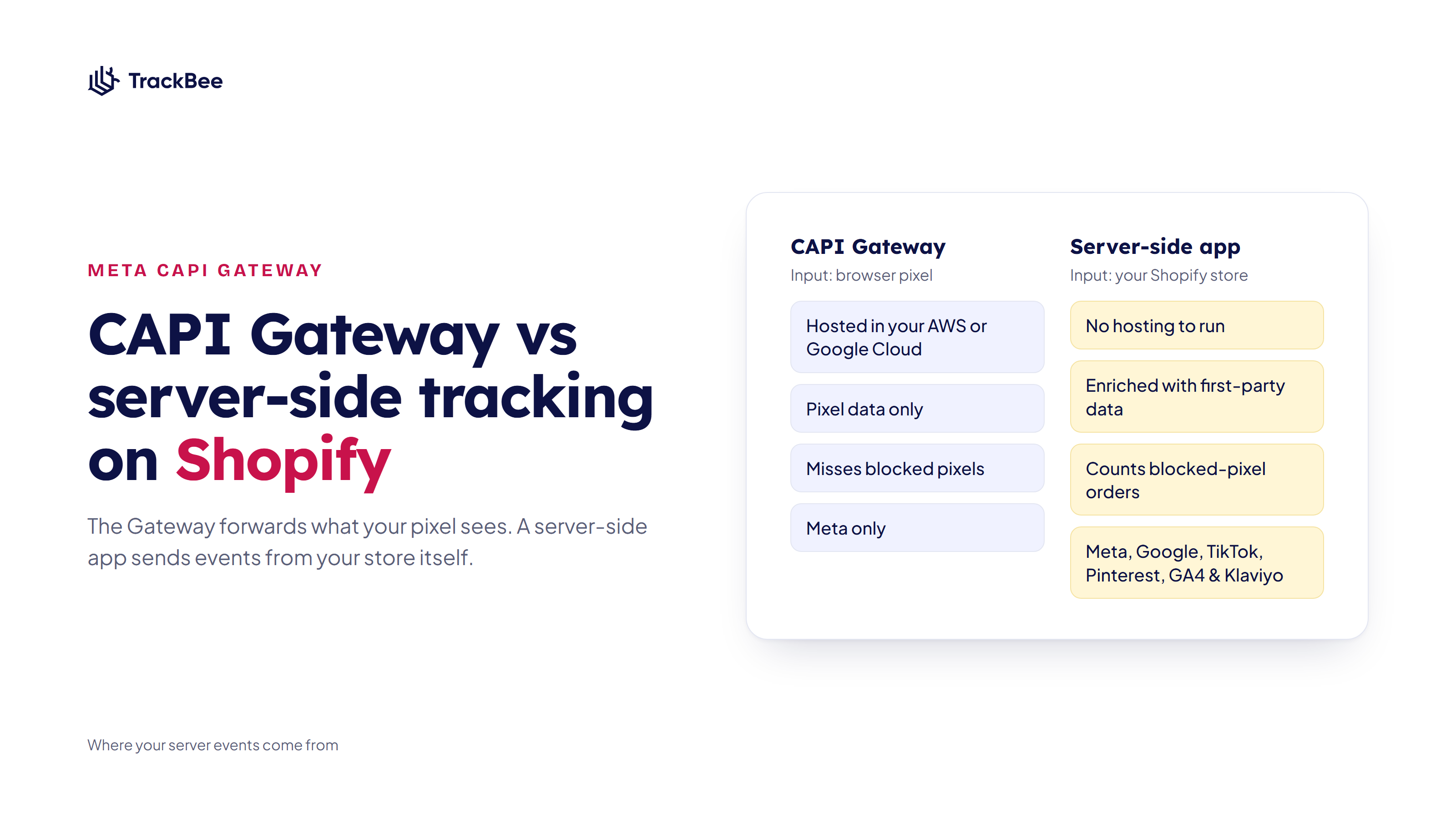
Server-side tracking closes most of that gap. Purchases are sent from the server, so they reach Google and Meta even when the browser pixel does not fire. See what server-side tracking is and how to install it on Shopify.
Richer events help too. When a conversion arrives with a hashed email and click IDs instead of only an IP address, the platform can match it to the right person, including across devices. TrackBee builds persistent shopper profiles and enriches it with first-party data before every event goes to Meta, Google, TikTok, Pinterest, GA4 & Klaviyo. For Google this runs through Enhanced Conversions, an enrichment feature that adds hashed customer data to your conversions. More on the full picture in full-funnel tracking for Shopify.
When to Switch From Last Touch to Data-Driven Attribution
For most Shopify stores running ads on more than one channel, DDA is the better default. Switch when:
-
You run campaigns across several channels or funnel stages, so last touch is clearly skewing credit
-
You suspect you are overspending on retargeting and branded search and underspending on prospecting
-
You have steady conversion volume (Google suggests 200 conversions and 2,000 interactions in 30 days for the best precision)
Stick with last click for now if a conversion action has very little volume, or if you need numbers that stay comparable with older reports for a while. Either way, note the date you changed models so nobody reads the shift as a performance change.
Before you switch: fix tracking completeness first. Moving to DDA on incomplete data gives you a more sophisticated version of the wrong answer. Get server-side tracking running, check your conversion counts against Shopify, and then change the model.
Frequently Asked Questions
What is the difference between data-driven attribution and last click?
Last click gives all credit to the final ad click before a purchase. Data-driven attribution compares converting and non-converting paths and shares credit across the touchpoints that raised the chance of a sale. Last click favours bottom-funnel channels; DDA gives more credit to the campaigns that start journeys.
Is last touch attribution still available in GA4?
Yes. GA4 offers data-driven attribution plus two last click options: paid and organic last click, and Google paid channels last click. First click, linear, time decay and position-based were removed in November 2023.
Does data-driven attribution need a minimum number of conversions?
Not anymore in Google Ads. All conversion actions are eligible. Google recommends 200 conversions and 2,000 ad interactions within 30 days for the most precise results, and accuracy drops with less data.
Will my ROAS change when I switch to data-driven attribution?
Yes, per channel. Retargeting and branded search usually show lower ROAS, and prospecting shows higher. Your actual revenue does not change, only how the credit is split.
Is data-driven attribution accurate?
It is usually more useful than last touch, but it is not neutral. Each platform's model only sees its own touchpoints, it estimates contribution rather than proving it, and it learns from whatever conversions reach it. Treat it as a guide and check it against Shopify revenue and MER.
Does switching attribution models require code changes?
No. In Google Ads and GA4 you change the model in the settings. Your tracking stays the same; only the way credit is assigned changes.
Give Your Attribution Model Complete Data
Whichever model you pick, it can only split credit for the conversions it receives. TrackBee sends every Shopify conversion server-side and enriches it with first-party data, so your attribution starts from the full picture. Try TrackBee for free.