
How OMNIAIR runs its own dashboard, ads and email on TrackBee data
OMNIAIR connected its own company dashboard to TrackBee Insights, filtered free affiliate orders out of its ad data and added TrackBee abandonment flows in Klaviyo.
- Result
- +71%Extra Klaviyo revenue from the TrackBee abandonment flows in 30 days, measured against the original flows
- Dashboard
- TrackBee Insights in OMNIAIR HQ, through MCP
- Channels
- Meta, Google, TikTok, Snapchat & Klaviyo
- Store
- Shopify, nasal strips and recovery products
From one TikTok video to a team of eight
OMNIAIR started almost two years ago with a single product: transparent nasal strips. A TikTok video went viral and the first batch of 500 sold out organically.
Today OMNIAIR is a team of eight, led by founder Lars van Capelle and his co-founder Akram. Lars runs the webshop, Klaviyo, product development and the brand, and Akram runs marketing and media buying. The range now includes recovery products too, with ice baths and pop-up saunas.
Paid acquisition started on TikTok, and Meta followed a few months later. Google runs on a small budget as a safety net, so people searching for OMNIAIR don't end up with a competitor. OMNIAIR tried three or four agencies along the way and results went backwards each time. Since they brought everything in-house, results and profit have both gone up.
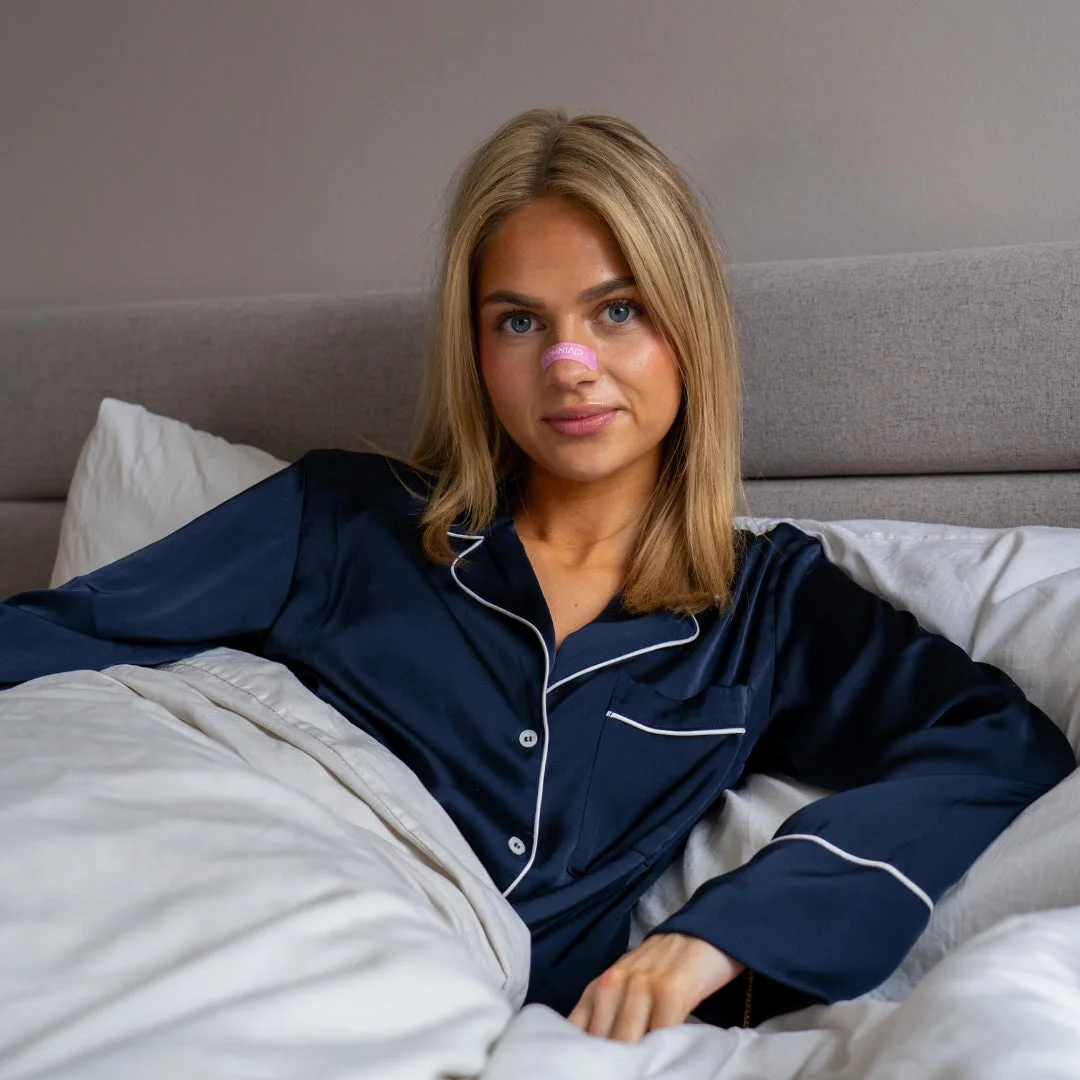
Acquisition is the most important part of your business. That's not something you can outsource to an agency, especially when they don't put in the same energy and time you would.

Before TrackBee, OMNIAIR tracked with WeTracked. They also had a year of Triple Whale but never really used it. Lars wasn't happy with what WeTracked gave them for the price, so they looked around and switched to TrackBee.
TrackBee data inside OMNIAIR's own dashboard
Lars built an internal platform, OMNIAIR HQ, and that's where the team reads its TrackBee numbers. He connected it to TrackBee Insights through MCP.
MCP (Model Context Protocol) works a lot like an API. Software asks for data in a standard way and gets extra context about what each metric means. OMNIAIR logged in once and didn't need CSV exports or API keys. HQ pulls the store and marketing data and refreshes it every few minutes.
The same dashboards also pull in the marketplaces (Bol.com, Amazon and Decathlon), subscriptions and customer support, so the team sees the whole business in one place.
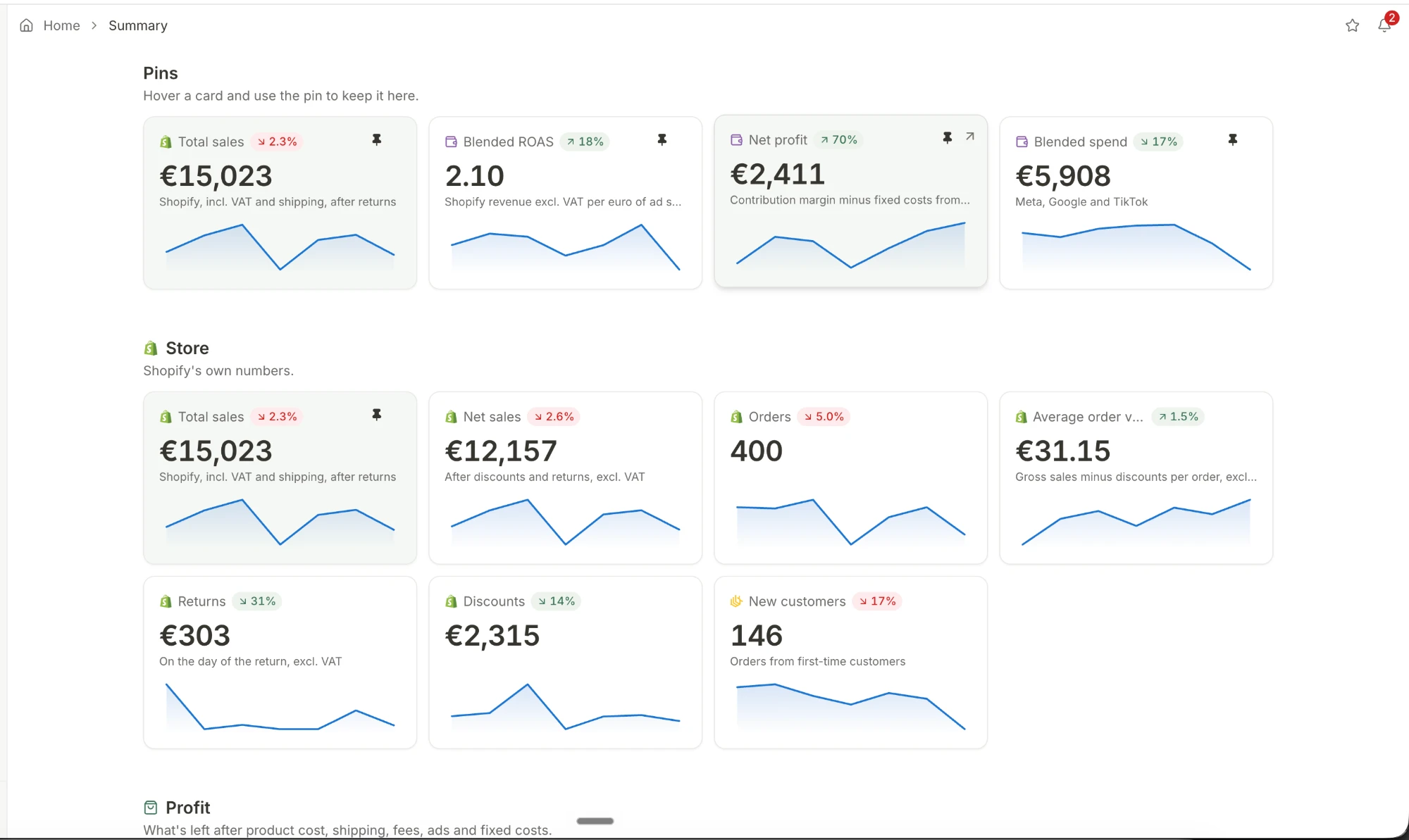
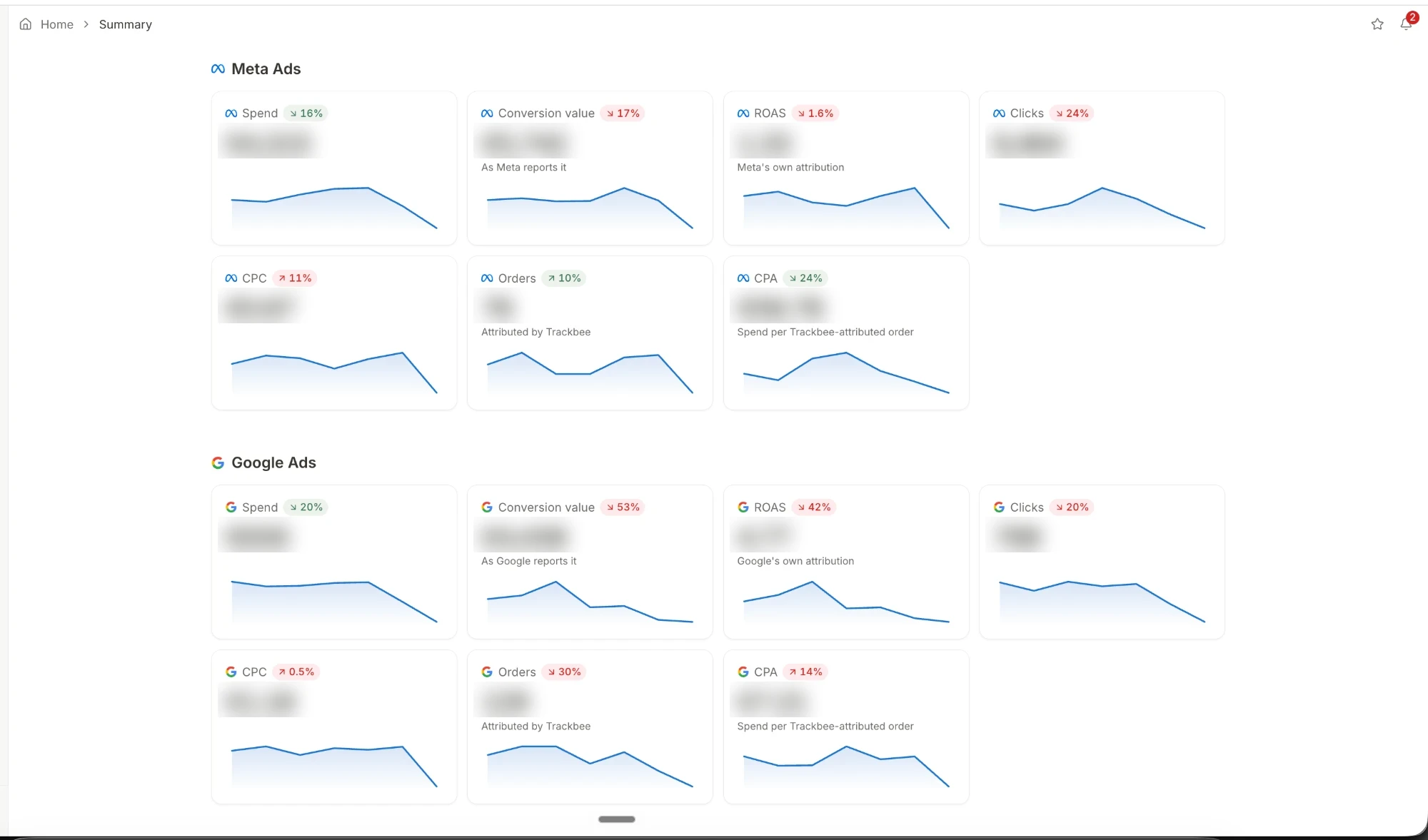
What the team uses it for
Summary
Daily revenue, orders, ad spend, ROAS and new customer ROAS across all channels.
Margin, every day
TrackBee revenue, product costs and ad spend set against shipping and payment costs, which gives contribution margin and break-even ROAS per day.
Team KPIs
New customers and new customer ROAS are set as targets in HQ, so the whole team can see where they stand.
We connected TrackBee through MCP. One login and done, no hassle with exports or API keys. Now we have an overview of the whole business instead of ten separate tabs.
Ads with a €3 CPA and a ROAS of 0
OMNIAIR's affiliates can order free nasal strips every month. Like most affiliate software, theirs creates those orders in Shopify as €0 orders. Affiliates also scroll Meta and TikTok, so they see OMNIAIR's ads like anyone else. When an affiliate clicked or viewed an ad and later placed their free order, that order was credited to the ad.
We'd see an ad with a CPA of €3 and a ROAS of 0 and think, how is that possible? It was because a €0 order was attached to it. You couldn't really steer on that data.
On a new ad, a ROAS of 0 is confusing. On an ad that also sells, the €0 orders count as purchases too. The CPA looks better than it is, and Meta learns from people who ordered for free.
With TrackBee's order filter, OMNIAIR excluded the affiliate orders by the tag they carry in Shopify. Those orders are no longer sent as purchases to any of the platforms TrackBee sends data to, so CPA and purchase counts reflect paying customers again.
Every brand that works with affiliates gets those €0 orders, because every affiliate tool works the same way. Since we exclude them, ads with a ROAS of 0 and a CPA of a few euros simply don't show up anymore.
TrackBee flows earned 71% on top of the original flows
OMNIAIR added TrackBee flows for browse, cart and checkout abandonment in Klaviyo, next to the original flows. TrackBee captures the events behind them server-side and enriches them with first-party data, so the flows also reach shoppers that Klaviyo's onsite tracking and Shopify don't pick up.
Over 30 days, Klaviyo credited the TrackBee flows with revenue equal to 71% of what the original flows earned.
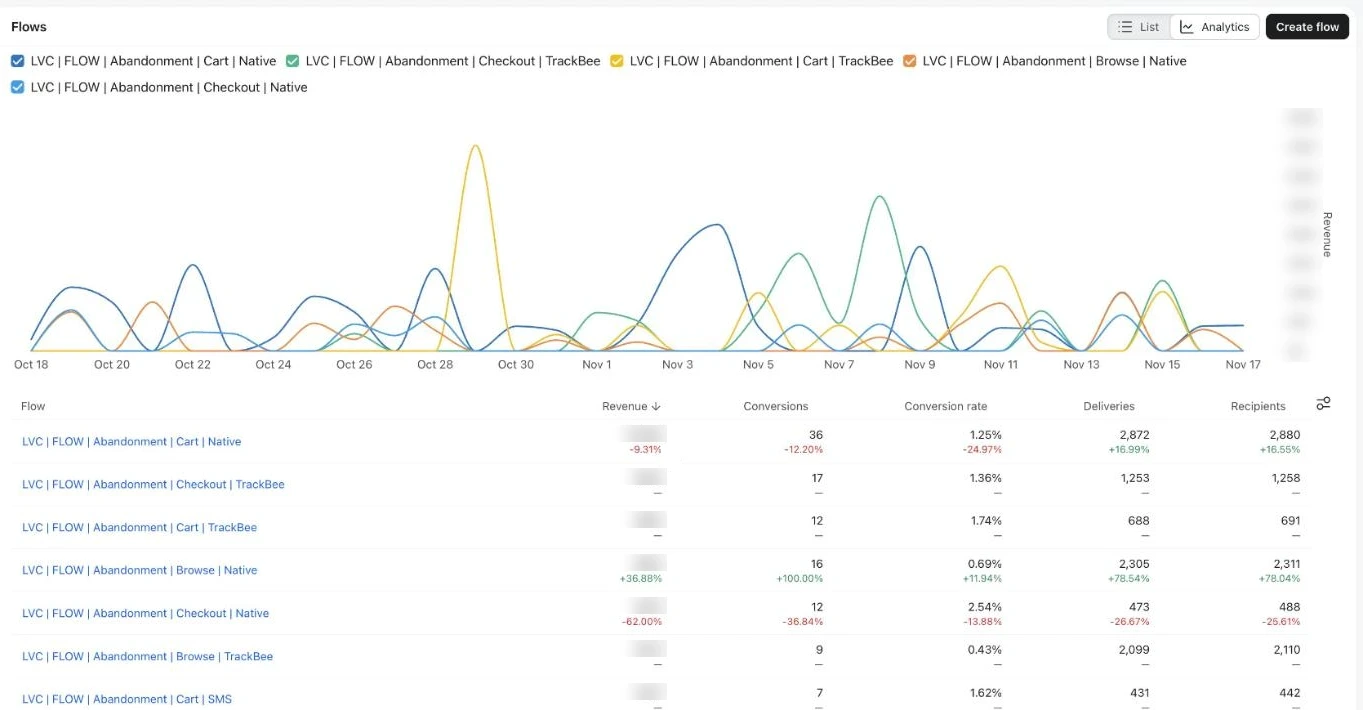
Revenue per flow, 30 days
TrackBee flow revenue as % of the original flow, drawn to scale.
How the checkout and cart flows differ
The TrackBee checkout flow reached 2.6x as many shoppers as the original flow, and they placed 42% more orders. The original converts a larger share of its smaller audience, so the gain comes from reaching more of the people who abandon checkout.
The TrackBee cart flow goes to a smaller group, about a quarter as many recipients as the original cart email. Those shoppers converted 39% more often, and revenue per recipient was 2.2x that of the original.
More of the events the flows run on
Klaviyo can only start a flow for a shopper it has seen. TrackBee sends Klaviyo its own stream of shopper events, next to what Klaviyo gets from its onsite tracking and from Shopify. Over the same weeks, the TrackBee stream held more product views and add-to-carts. Checkout Started came out about even per shopper, but partly different shoppers: TrackBee also reaches recognised shoppers who leave before typing their email. That is where the checkout flow's extra reach comes from.
The streams overlap, so the percentages compare totals, not extra shoppers. The extra shoppers show up in the flow results above.
Events received in Klaviyo over 30 days